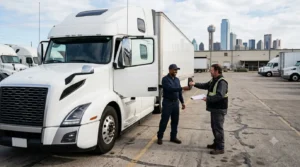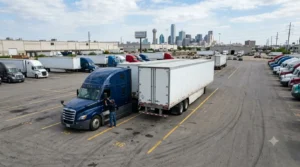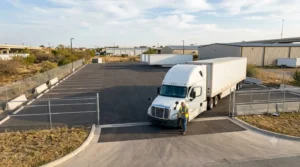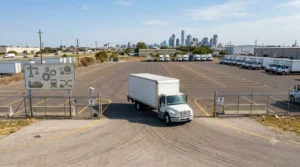
A shared truck parking lot can solve the parking problem—but only if everyone knows where things go.
When several trucks use the same property, small mistakes can spread quickly. One driver parks in the wrong space. Another trailer blocks a lane. Dispatch has an old location. Then the next driver arrives and nobody is sure where the equipment is supposed to be.
For fleets and operators using shared commercial parking in Dallas, organization is not about making the lot look neat. It is about making the parking process predictable.
Why Shared Truck Parking Gets Messy
A single truck can usually be handled with a simple parking instruction. Multiple trucks create more moving parts.
You may have different drivers, tractors, trailers, shifts, equipment types, and schedules using the same parking area. Without a basic system, the lot can become a daily guessing game.
The goal is simple: every driver should know what equipment is parked, where it belongs, and what to do when it moves.
1. Stop Using “Park Wherever There Is Room”
The fastest way to create confusion is to make parking informal.
Instead, use a clear assignment process. Each truck or trailer should have a known space or a documented process for finding the next available space.
- Assign spaces before the driver arrives.
- Use the same naming format for every space.
- Keep the assignment in one shared record.
- Update the record when equipment moves.
A parking plan only works when the information on paper matches what is actually in the lot.
2. Give Every Truck and Trailer a Clear ID
Drivers should not have to identify equipment by memory.
Use a consistent identifier such as a truck number, trailer number, unit number, or another internal ID. Then connect that ID to the parking-space assignment.
For example: Trailer 417 → Space B-12.
That simple connection can make a large shared lot much easier to manage.
3. Protect the Drive Lanes
Organization is not just about assigned spaces. The areas between the spaces matter too.
A truck parked slightly outside its position can reduce turning room for several other vehicles. A trailer left near an access lane can make another driver’s arrival much harder.
- Keep turning areas clear.
- Do not block entrance or exit paths.
- Keep equipment inside its assigned area.
- Avoid using access lanes as temporary storage.
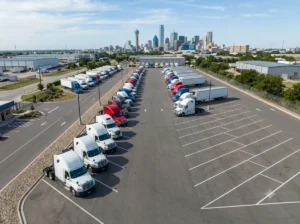
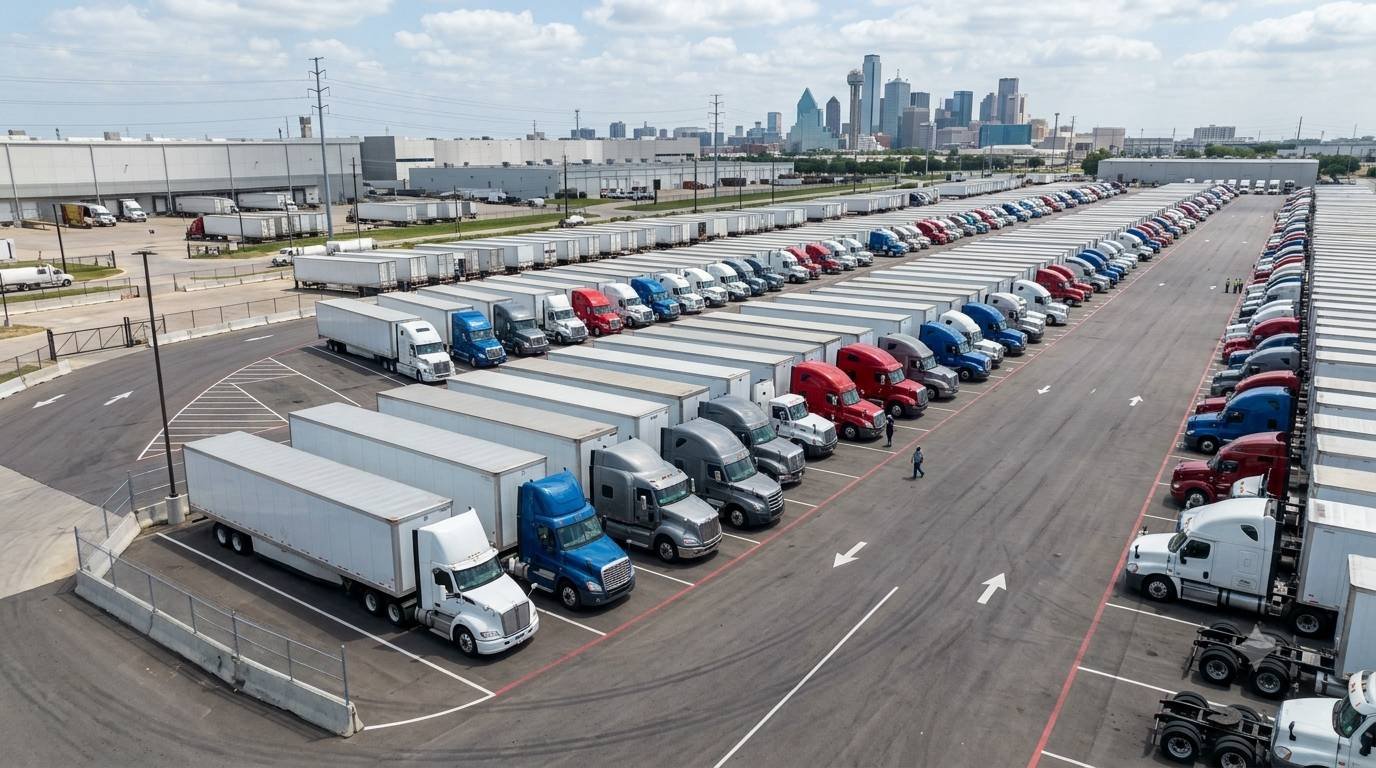
Dallas Truck Parking describes its facility as having wide spaces and broad alleyways designed to make commercial-vehicle maneuvering easier. The same principle should guide how drivers use any shared lot.
4. Make Changes Immediately When a Truck Moves
One of the most common shared-parking problems is stale information.
A trailer moves, but the dispatch record still shows the old space. A replacement driver arrives and goes to the wrong area. Someone calls dispatch. Another person checks the lot. Time disappears.
The fix is simple: update the parking record when the equipment moves, not later.
- Truck moved → update the assignment.
- Trailer swapped → update the trailer ID.
- Space changed → update the location.
- Vehicle leaves → release the space in the record.
5. Give Every Driver the Same Arrival Instructions
A shared lot becomes easier to manage when the parking process is repeatable.
Create a short parking instruction that includes:
- Facility address
- Entry information
- Assigned space or assignment process
- Equipment identification
- Contact information
- What to do if the assigned space is unavailable
Dallas Truck Parking is located at 3805 Cleveland Rd, off I-20 between I-35 and I-45, and its site provides commercial parking and online parking management. The business also advertises 24/7 commercial access. Verify the current entry procedure before giving drivers instructions.
6. Account for Different Equipment Types
Shared parking becomes more complicated when the fleet does not operate identical equipment.
A tractor, full tractor-trailer, reefer, lowboy, bobtail, box truck, or hot shot setup may need a different parking arrangement.
Dallas Truck Parking currently lists multiple commercial equipment types, including tractors, tractor-trailer combinations, dry vans, lowboys, flatbeds, reefers, 18-wheelers, and shorter-space options for bobtails, box trucks, and hot shots.
Before assigning a space, match the equipment to the correct current space type. Do not assume that a space used by one vehicle will work for another configuration.
7. Create a Simple Exception Plan
Even a good parking system will have exceptions.
A driver may arrive early. A truck may need a different space. A trailer may stay longer than expected. A scheduled vehicle may be replaced.
Give drivers a simple rule for those situations:
- Do not improvise by blocking a lane.
- Contact the assigned fleet or parking contact.
- Record the temporary location.
- Update the parking record immediately.
That keeps one unusual situation from turning into a lot-wide problem.
8. Review the System as the Fleet Changes
A parking process that worked for five vehicles may not work the same way for fifteen.
Review the arrangement when the number of trucks changes, equipment types change, routes change, or drivers report repeated parking problems.
The goal is not to create a complicated system. It is to keep the system simple enough that every driver actually follows it.
Shared Truck Parking Checklist
- Does every truck or trailer have a clear assignment?
- Can drivers identify the equipment quickly?
- Are turning and exit lanes always kept clear?
- Is the parking record updated when equipment moves?
- Do all drivers receive the same arrival instructions?
- Are different equipment types matched to the right spaces?
- Is there a process for unexpected changes?
When the answer is yes, parking becomes a workflow instead of a daily guessing game.
Need an Organized Commercial Truck Parking Setup in Dallas?
Dallas Truck Parking offers commercial parking at 3805 Cleveland Rd, off I-20 between I-35 and I-45. The current site describes commercial parking for multiple vehicle types, online parking management, and 24/7 access. Verify current availability, space types, and access procedures before setting up a shared parking plan.
If multiple trucks are using Dallas parking, the right space is only the beginning. The process around the space matters too.
Check current availability and build a parking setup your drivers can actually follow.
FAQ
How do you organize a shared truck parking lot?
Use clear space assignments, consistent vehicle and trailer IDs, protected drive lanes, immediate record updates, and the same arrival instructions for every driver.
Why are space assignments important for fleet truck parking?
A known assignment reduces uncertainty. Drivers can find equipment faster, dispatch can work from one record, and a move can be documented without relying on memory.
What should drivers do if their assigned parking space is unavailable?
They should follow the fleet or facility exception procedure rather than blocking a lane or choosing an unapproved space. Record any temporary location and update the parking record.
Does Dallas Truck Parking accommodate different truck types?
The current site lists multiple commercial vehicle types, including tractor-trailers, 18-wheelers, reefers, lowboys, flatbeds, dry vans, bobtails, box trucks, and hot shots. Confirm the current space type and availability before booking.