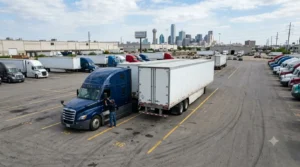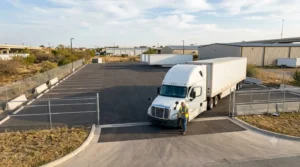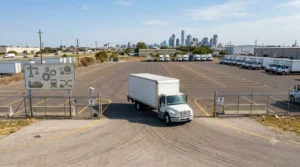
After a long run, the last thing a driver needs is another parking problem.
You are tired. You want to get the truck parked, secure the equipment, and be done.
That is exactly when small mistakes can happen: an old address, a missed entrance, a last-minute maneuver, or parking in the wrong area.
A simple return-to-parking routine can reduce that friction. The goal is not to make parking complicated. It is to make the important checks automatic.
1. Before You Enter: Confirm the Basics
Do not rely on a parking note you saved months ago. Before heading into the final stretch of the trip, confirm the information you are using is still current.
- Confirm the exact parking address.
- Review the current entry or gate instructions.
- Check that the parking arrangement still matches your truck or trailer.
- Keep the facility contact information available in case something has changed.
A 30-second check can prevent an unnecessary detour at the end of a long day.
2. Approach the Facility With a Plan
Fatigue can make a driver more likely to improvise. Try to avoid making a last-second decision because the normal approach was missed.
Review the route before the final turn. Know which entrance you expect to use and what you should do once you arrive.
The safer approach is the predictable one: slow down, follow the current instructions, and avoid unnecessary corrections.
3. Confirm the Parking Space or Process
Once you arrive, do not assume an open-looking area is your assigned parking space.
Confirm the expected space or follow the facility parking process. If the arrangement has changed, stop and get clarification instead of creating a new parking solution on your own.
This matters even more in shared commercial parking where one incorrect position can interfere with another truck’s movement.
4. Protect Equipment Without Blocking the Lot
Parking safely is more than putting the truck inside the lines. The equipment should be positioned so it does not create an avoidable circulation problem.
- Follow the facility’s vehicle and access rules.
- Keep drive lanes and required access areas clear.
- Position the truck and trailer as instructed.
- Do not use another vehicle’s assigned area as a temporary solution without confirmation.
A clean parking position makes the next movement easier for both you and the driver who arrives after you.
5. Check the Immediate Surroundings
After the truck is parked, take a quick look before ending the stop.
Confirm that the vehicle is positioned as expected, the immediate access points are clear, and any trailer or equipment is where the fleet record or parking plan says it should be.
This is a small habit, but it can catch a problem before the driver leaves the property.
6. Do a Final Equipment Check
Before walking away from the truck, make the final checks that are appropriate for your operation and the facility’s rules.
- Confirm the truck and trailer are in the expected location.
- Make sure nothing is obstructing an access route.
- Check that the parking position matches the dispatch or fleet record when one is used.
- Report any issue that needs attention rather than leaving it for the next driver.
The objective is simple: leave the truck where the next person expects to find it.
7. Think About the Next Departure Before You Leave
Parking is not the end of the trip. It is part of the next trip too.
Before leaving the property, confirm the next departure plan. Know the expected exit path and keep the current instructions available.
This is especially useful after a long run when the driver may have been away from the facility for several days.
Quick Return-to-Parking Safety Checklist
- Address confirmed?
- Entry instructions current?
- Route and entrance reviewed?
- Assigned space or parking process confirmed?
- Truck and trailer positioned correctly?
- Circulation and access areas clear?
- Equipment location matches the fleet record?
- Next departure plan clear?
If the answer to each question is yes, the return-to-parking process is doing what it should: reducing uncertainty when the driver is already tired.
What Drivers Should Not Do After a Long Trip
- Do not assume an old parking message is still correct.
- Do not make a risky last-minute maneuver because you missed an entrance.
- Do not take an unassigned space just because it looks open.
- Do not block a lane while figuring out where to park.
- Do not leave a change in equipment location undocumented.
- Do not wait until departure to discover that the parking instructions have changed.
Need a Dependable Dallas Truck Parking Location?
A dependable parking setup should make the return easier, not create another decision at the end of a long trip.
Use this checklist as a repeatable driver-facing process, then verify the current parking facility details, access procedure, vehicle requirements, and availability before relying on them.
Need a dependable place to park in Dallas? Contact Dallas Truck Parking to confirm current availability and access.
FAQ
What should be on a truck parking safety checklist for drivers?
Keep it practical: verify the address and entry instructions, review the route, confirm the assigned space or parking process, keep circulation clear, check the parked equipment, and confirm the next departure plan.
What should I confirm before returning to a truck parking facility?
Confirm the current address, access instructions, parking process, and any vehicle-specific requirements. When availability or access can change, verify the current information before the driver arrives.
Why is a checklist useful after a long trip?
Fatigue can make small decisions harder. A repeatable checklist reduces the amount a driver has to remember or improvise when returning to the parking location.
What should a driver do if the assigned parking space is unavailable?
Do not block circulation or choose another space without confirmation. Follow the facility or fleet exception process and contact the appropriate person for updated instructions.
Why should the next departure be part of the parking check?
A parking stop supports the next movement. Confirming the exit plan and current instructions before leaving helps prevent another avoidable problem at departure.