Adding trucks is exciting until the parking problem shows up.
A fleet can add vehicles faster than it adds a workable place to park them. Then dispatch has to improvise, drivers are unsure where a truck belongs, and every new unit creates another parking question.
Good fleet parking starts before you run out of space. The goal is not simply to find more spots. It is to build a parking plan that can keep working as the fleet changes.
1. Start With Your Real Fleet Count
Do not plan from the number of trucks you own on paper. Plan from the number that actually needs parking.
Separate the fleet into practical groups:
- Trucks that return to Dallas regularly
- Trailers or equipment that remain on-site
- Vehicles that need temporary parking
- Units that are rarely in the area
This gives you a more useful starting point than one total number.
2. Plan for Growth, Not Just Today
A parking setup that is full on day one leaves no room for the next truck.
Before committing to a location, think about your near-term growth. A simple forecast can ask:
- How many additional units may need parking?
- Will the vehicle mix change?
- Will trailers increase faster than tractors?
- Will the fleet begin returning to Dallas more often?
You do not need a perfect forecast. You need enough visibility to avoid rebuilding the parking plan every few months.
3. Count the Equipment, Not Just the Trucks
Truck parking demand is not always one truck equals one space.
A growing fleet may have tractors, trailers, reefers, flatbeds, lowboys, box trucks, or other equipment with different operational needs.
Match the parking plan to the equipment that will actually be stored or parked. Confirm the current facility rules and available space types before assigning vehicles.
4. Leave Room for Movement
Parking capacity is not only about how many vehicles physically fit.
Drivers also need room to enter, turn, reposition, and leave without creating a bottleneck.
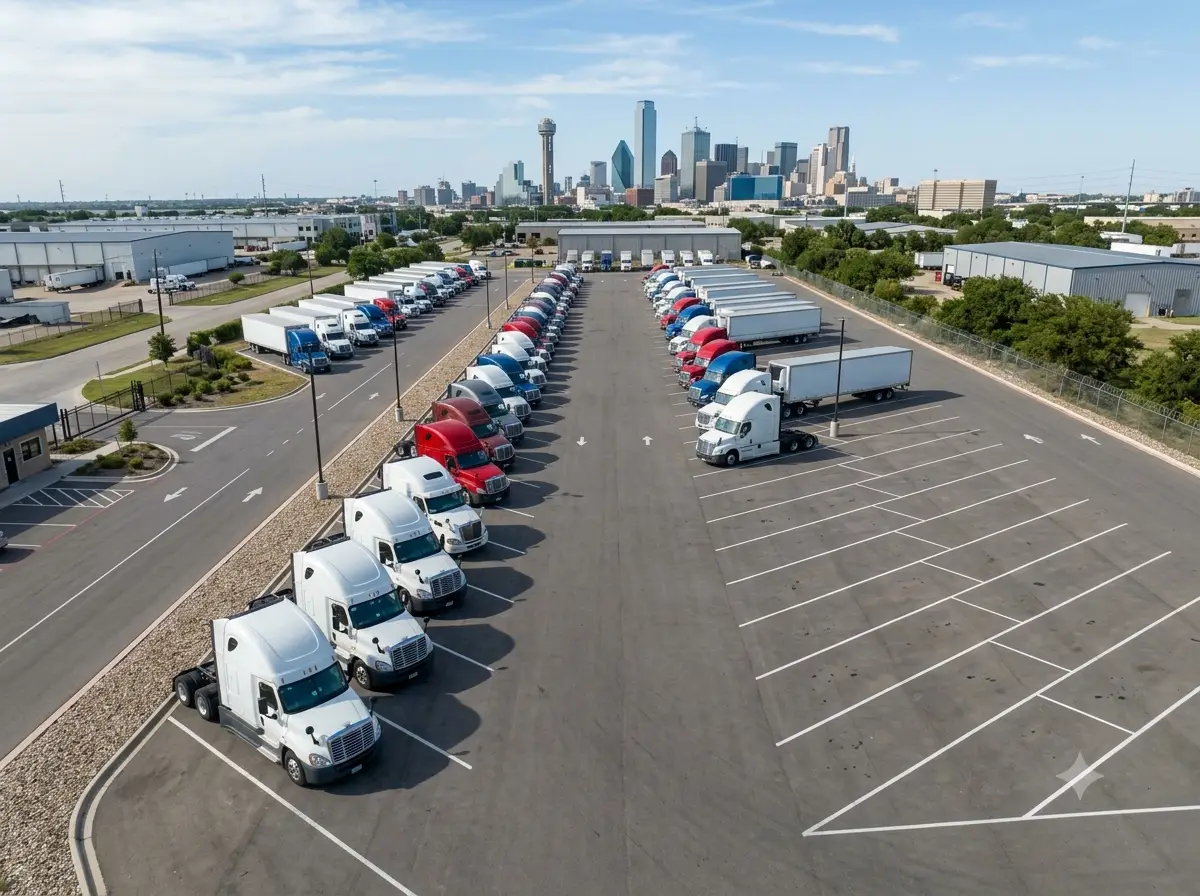
When reviewing a parking location, consider the circulation pattern as carefully as the number of spaces. A tightly packed lot may look efficient until a driver has to move a trailer or reach a specific unit.
5. Separate Regular Parking From Temporary Demand
Not every truck needs the same parking arrangement.
Some units may need a recurring home base. Others may be in Dallas for a short period because of a load delay, route change, maintenance issue, or equipment transition.
Keep these demand types separate in your planning. Otherwise, temporary parking can consume the space your regular operation depends on.
6. Build a Simple Assignment System
Growth makes parking harder to manage when nobody knows which unit belongs where.
Use a basic record that connects the parking location with the vehicle or equipment assigned to it.
- Unit or truck number
- Trailer or equipment number when relevant
- Assigned area or space
- Driver or dispatch contact when needed
- Date the assignment was last checked
The system does not have to be complicated. It just needs to stay current.
7. Review Access as the Fleet Grows
A parking location that works for five trucks may still work at ten, but the operating process can change.
More vehicles can mean more arrivals, departures, shift overlap, and equipment movement.
Review whether the access process, communication, and site rules still fit the larger fleet. Confirm current terms directly with the parking provider instead of assuming old instructions still apply.
8. Know Your Trigger for Expanding Parking
Do not wait until drivers are already struggling to find space.
Set a simple internal trigger for review, such as when your regular parking occupancy stays consistently high or when a planned fleet expansion is approved.
That turns parking from an emergency problem into an operations planning task.
Simple Fleet Parking Capacity Checklist
- How many vehicles regularly need Dallas parking?
- How many trailers or other equipment units also require space?
- What equipment types are in the fleet?
- How much room is needed for safe movement?
- How much temporary demand should be expected?
- How many additional units are planned?
- Who maintains the current parking assignment record?
- When will the parking arrangement be reviewed again?
Common Fleet Parking Planning Mistakes
- Planning from the current truck count only
- Ignoring trailer and equipment volume
- Using every available space without considering circulation
- Mixing temporary parking with recurring fleet parking
- Keeping assignments in outdated spreadsheets or messages
- Waiting until the fleet is already full before reviewing options
The Goal Is Predictable Capacity
The best parking plan gives operations a clear answer to a simple question: “Where does the next truck go?”
For a growing Dallas fleet, that answer should be based on actual vehicle demand, equipment mix, movement needs, and expected growth—not a last-minute search for an open space.
Need Commercial Truck Parking for a Growing Dallas Fleet?
Dallas Truck Parking can be considered as part of a fleet parking plan when your operation needs commercial space in Dallas. Confirm current availability, space types, access procedures, and terms before assigning the location to additional vehicles.
Planning for growth now can prevent a parking scramble later.
CTA: Check Current Commercial Parking Availability
FAQ
How should a growing fleet plan truck parking space in Dallas?
Start with the vehicles and equipment that actually need parking, then account for expected fleet growth, circulation space, recurring versus temporary demand, and the parking assignment process. Review the plan before the fleet reaches capacity.
Should fleet parking plans include trailers?
Yes. Trailer demand can materially affect parking capacity, especially when trailers remain parked while tractors continue operating. Count trailers and other equipment separately when building the capacity plan.
How much extra truck parking capacity should a growing fleet keep?
There is no single number that fits every fleet. The useful target depends on return frequency, vehicle mix, temporary demand, and planned growth. Use a fleet forecast and review capacity before the available space becomes consistently tight.
Why does circulation matter when planning truck parking?
A space is only useful when the truck can reach it and leave it without creating an operational bottleneck. Turning room, access routes, and equipment movement should be considered alongside the raw number of parking spaces.
When should a fleet review its truck parking arrangement?
Review when the fleet grows, equipment mix changes, routes shift, parking demand becomes consistently high, or the current access process no longer fits daily operations.