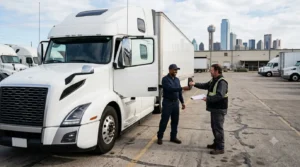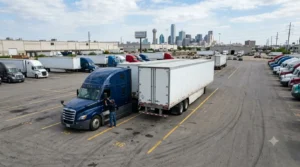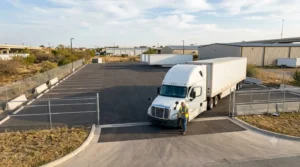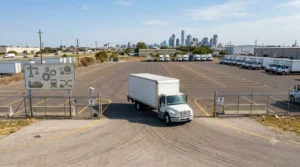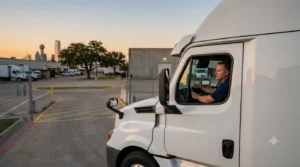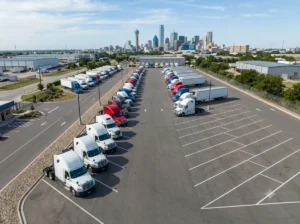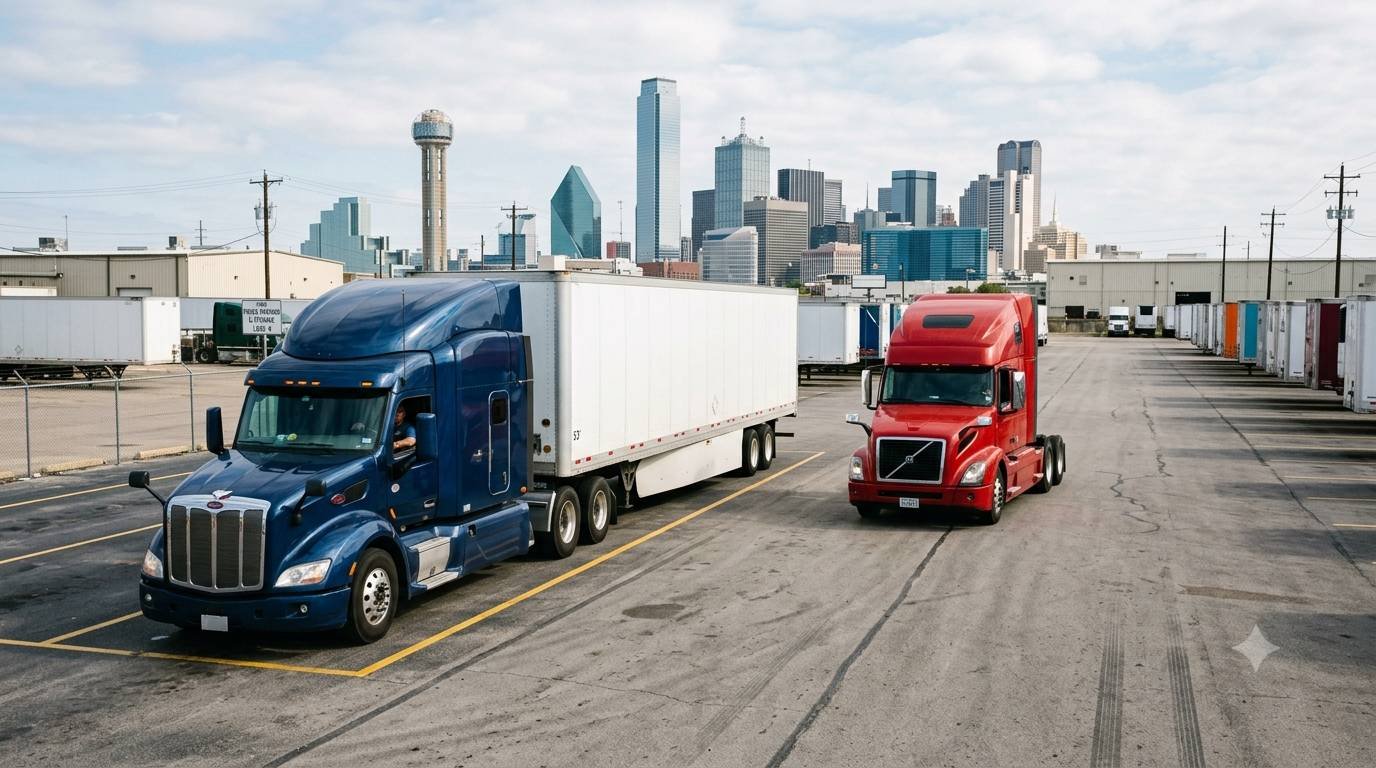
The driver drops one trailer. Another driver picks it up. A different tractor arrives. Suddenly, the parking lot has become part of the handoff.
That is where trailer changes and equipment swaps can get messy.
If the equipment is parked in the wrong place, the next driver cannot find it, or the replacement tractor does not fit the assigned space, a simple swap can turn into extra calls, extra movement, and wasted time.
For Dallas operators, the better approach is to treat the parking space as part of the equipment handoff—not as an afterthought.
Why Equipment Swaps Create a Parking Problem
A normal parking stop usually involves one truck arriving, parking, and leaving later.
An equipment swap can involve multiple movements:
- One tractor drops a trailer.
- The trailer remains parked.
- A different tractor arrives.
- Another driver retrieves the equipment.
- The original driver leaves with a different unit.
The parking location has to support all of those movements.
The goal is simple: everyone knows what is being moved, where it is parked, and who needs access next.
1. Define the Handoff Before the First Truck Moves
Do not start with the parking space. Start with the handoff.
Write down:
- What equipment is being dropped.
- What equipment is being picked up.
- Who is dropping it.
- Who is retrieving it.
- When the change is expected to happen.
This sounds basic, but clear ownership prevents one of the easiest mistakes in a busy parking operation: the wrong driver moving the wrong unit.
2. Give Every Trailer a Clear Parking Identity
A large lot can look simple until several similar trailers are parked in it.
Use a consistent identifier such as:
- Trailer number
- Unit number
- Assigned parking space
- Driver or dispatch reference
Keep the identifier in the dispatch notes so the next driver is not relying on a phone call like, “It is somewhere near the back.”
A clear parking assignment turns the lot into a handoff point instead of another search.
3. Make Sure the Next Driver Can Access the Equipment
The person who drops the trailer may not be the person who picks it up.
That means the parking process should work for the next driver—not just the current one.
Before the swap, confirm:
- How the replacement driver enters.
- Where the equipment is parked.
- How the driver identifies the correct unit.
- How access works outside normal office hours.
- Who to contact if the handoff changes.
Dallas Truck Parking currently advertises 24/7 commercial parking access. Confirm the current access procedure and share it with every driver involved in the swap.
4. Check the Space Again When the Equipment Changes
A space that works for one configuration may not automatically work for another.
For example, a trailer-only parking move is different from bringing a tractor-trailer combination into the same area.
Before a swap, confirm:
- The equipment type.
- The length and configuration.
- The assigned space.
- The maneuvering area.
- The route used to enter and exit.
Dallas Truck Parking currently lists multiple commercial vehicle types and describes wide parking spaces and broad access areas. Always verify the current space assignment for the exact equipment involved.
5. Do Not Let One Trailer Block the Next Movement
Trailer swaps work best when the parking layout supports the next movement.
Think about the full sequence:
- Trailer arrives.
- Trailer is positioned.
- Original tractor leaves.
- Replacement tractor enters.
- Replacement tractor connects or retrieves the equipment.
- The lane remains usable for the next vehicle.
Parking discipline matters. A trailer parked too close to an access lane can create a problem for several vehicles—not just the one being swapped.
6. Put the Swap Details in Dispatch Notes
If equipment changes are handled regularly, do not keep the process in someone’s memory.
Record the important information in the same place every time:
- Parking facility address
- Trailer or unit number
- Assigned space
- Driver responsible for the handoff
- Expected movement time
- Access information
The next driver should be able to understand the parking situation without calling three people.
7. Use a Repeatable Parking Process for Recurring Swaps
If your operation changes trailers regularly, create one standard process.
- Dispatch confirms the equipment change.
- The parking space is assigned.
- The trailer or unit number is recorded.
- The dropping driver receives the location.
- The next driver receives the same information.
- The space record is updated after the equipment moves.
A consistent process reduces the chance of outdated information becoming the problem.
What to Confirm Before an Equipment Swap
- What exactly is being dropped or picked up?
- Which space is assigned?
- Does the new equipment fit that space?
- Who is responsible for the next movement?
- How will the next driver access the facility?
- Where are the trailer and tractor supposed to go?
- Has dispatch updated the parking record?
The more predictable the handoff, the less time drivers spend solving parking problems in the middle of the swap.
Need Parking for Trailer Changes in Dallas?
Dallas Truck Parking provides commercial parking at 3805 Cleveland Rd, off I-20 between I-35 and I-45. The current site lists multiple commercial vehicle types and provides an online booking and management path. Verify the current space type, access process, and availability before scheduling an equipment swap.
Whether one trailer is moving or several units are being exchanged, treat the parking location as part of the handoff plan.
Check current availability before the equipment change happens.
FAQ
What is trailer change parking?
Trailer change parking is a planned parking arrangement used when one driver drops a trailer or equipment and another driver later retrieves or replaces it. The parking space becomes part of the equipment handoff process.
What should I record during a trailer swap?
Record the equipment or trailer number, assigned parking space, responsible driver, expected movement time, and access instructions. Keep those details in the dispatch system so the next driver has the same information.
Can the same parking space be used for a different tractor?
That depends on the equipment configuration and parking rules. Before the swap, confirm that the replacement tractor or combination fits the assigned space and that the facility allows the planned setup.
Where is Dallas Truck Parking located?
Dallas Truck Parking lists 3805 Cleveland Rd, Dallas, TX 75241, off I-20 between I-35 and I-45.