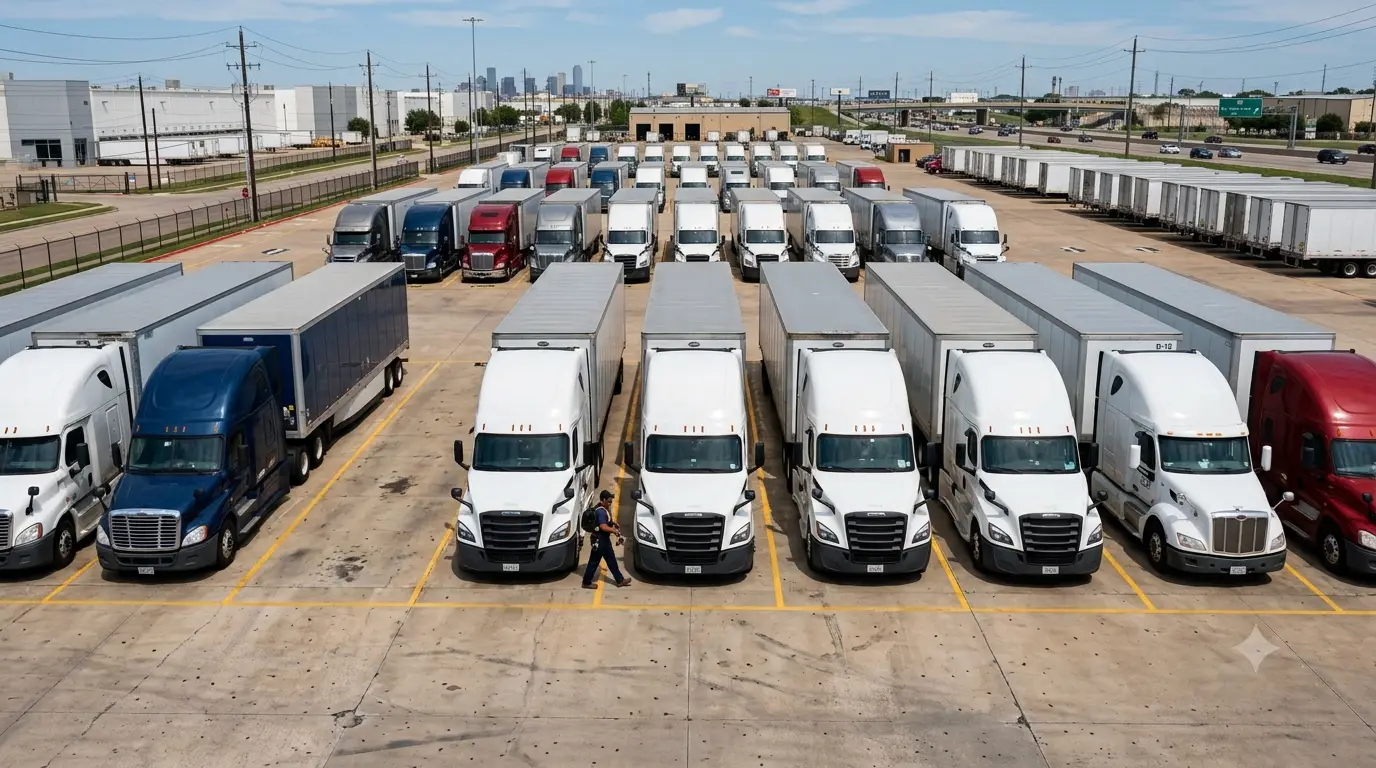
Parking problems rarely stay limited to parking.
A driver spends extra time looking for a space. Dispatch has to answer another call. A truck is parked somewhere different than expected. The next driver has to figure it out again.
For fleets that return to Dallas regularly, a consistent truck parking process can remove some of that daily friction.
The goal is not to use the same lot forever. The goal is to create a parking routine that drivers and dispatchers can understand and repeat.
1. Start With a Known Parking Location
Consistency begins with knowing where the truck is expected to go.
When a fleet repeatedly uses the same Dallas parking area, dispatch can standardize the basic instructions: where to arrive, how to access the location, what parking process to follow, and what to do when leaving.
That gives the driver a known destination instead of another parking search at the end of the day.
2. Reduce the Need to Rediscover Parking
A driver who returns to Dallas should not have to start the parking search from zero each time.
A repeat location can make the routine easier to communicate across shifts. Dispatch can work from one set of verified information, while drivers know what to expect before they arrive.
This is especially useful when the parking stop happens after a long run, when the driver has less time and attention available for unnecessary decisions.
3. Make the Driver Routine More Predictable
The value of consistency shows up in the small steps.
The driver knows the destination. The route plan includes the parking stop. The parking instructions are familiar. Departure planning starts from a known location.
None of those steps needs to be complicated. The benefit comes from repeating a clear process instead of rebuilding it every trip.
4. Improve Equipment Visibility and Handoffs
Consistent parking can also make handoffs easier when several drivers or units use the same facility.
A fleet can maintain a clearer record of where a truck or trailer is expected to be and communicate changes from a common process.
The key is keeping the information current. Consistency only helps when the parking record matches reality.
5. Use Recurring Parking Without Becoming Too Rigid
There is an important difference between consistency and inertia.
A parking location may work well today and become less suitable after a route, equipment type, schedule, or fleet volume changes.
Use recurring parking as a process, not a permanent assumption. Reconfirm that the location still fits the operation.
6. Review the Parking Setup When the Operation Changes
A simple review makes sense when something important changes.
- New customer or delivery pattern
- Different recurring routes through Dallas
- New equipment or trailer configurations
- More trucks using the same parking setup
- Changes to access requirements or parking terms
- A repeated driver complaint or operational delay
The purpose of the review is simple: make sure the parking arrangement still supports the way the fleet actually operates.
7. Keep One Verified Set of Parking Information
Consistency breaks down when dispatch, drivers, and managers each have a different version of the parking instructions.
Keep the current address, access information, parking process, contact details, and equipment notes in one place.
When something changes, update the shared record instead of relying on an old text message or personal note.
A Simple Fleet Parking Routine
- Choose the recurring parking location based on the actual route pattern.
- Document the arrival and access process.
- Give drivers one current set of parking instructions.
- Record equipment or space information when needed.
- Update the record whenever the arrangement changes.
- Review the parking setup when routes, equipment, or fleet volume change.
This keeps the parking process simple enough for drivers and useful enough for dispatch.
What Consistent Truck Parking Should Not Mean
Consistency should not mean ignoring a problem just because the fleet has used a location before.
A good parking setup should continue to make sense for the vehicle, route, access needs, and current operating terms.
When those conditions change, the parking decision should change with them.
Need a More Predictable Dallas Truck Parking Routine?
Dallas fleets that return to the same area repeatedly may benefit from a parking process built around repeat use and clear communication.
Before making a recurring arrangement, confirm the current parking availability, vehicle compatibility, access requirements, and terms with the parking provider.
Contact Dallas Truck Parking about current commercial availability and choose a setup that fits the way your fleet actually runs.
FAQ
How can consistent truck parking help fleet operations?
A consistent parking process gives drivers and dispatchers a known destination and repeatable instructions. It can reduce the need to search for a new parking option each time a truck returns to Dallas and make handoffs easier to communicate.
Why is recurring truck parking useful for fleets?
Recurring parking can make arrival, access, and departure routines easier to standardize. It is most useful when the parking location still fits the fleet’s routes, equipment, access requirements, and current operating needs.
What should a fleet review before choosing a recurring parking location?
Review the location against the actual route pattern, equipment, access process, parking terms, and expected usage. Confirm current availability and any site-specific requirements before committing.
Should a fleet keep the same parking location permanently?
Not necessarily. Consistency is useful, but a fleet should review the arrangement when routes, equipment, schedule, or operational volume changes. A recurring location should remain a good fit rather than become an automatic choice.